

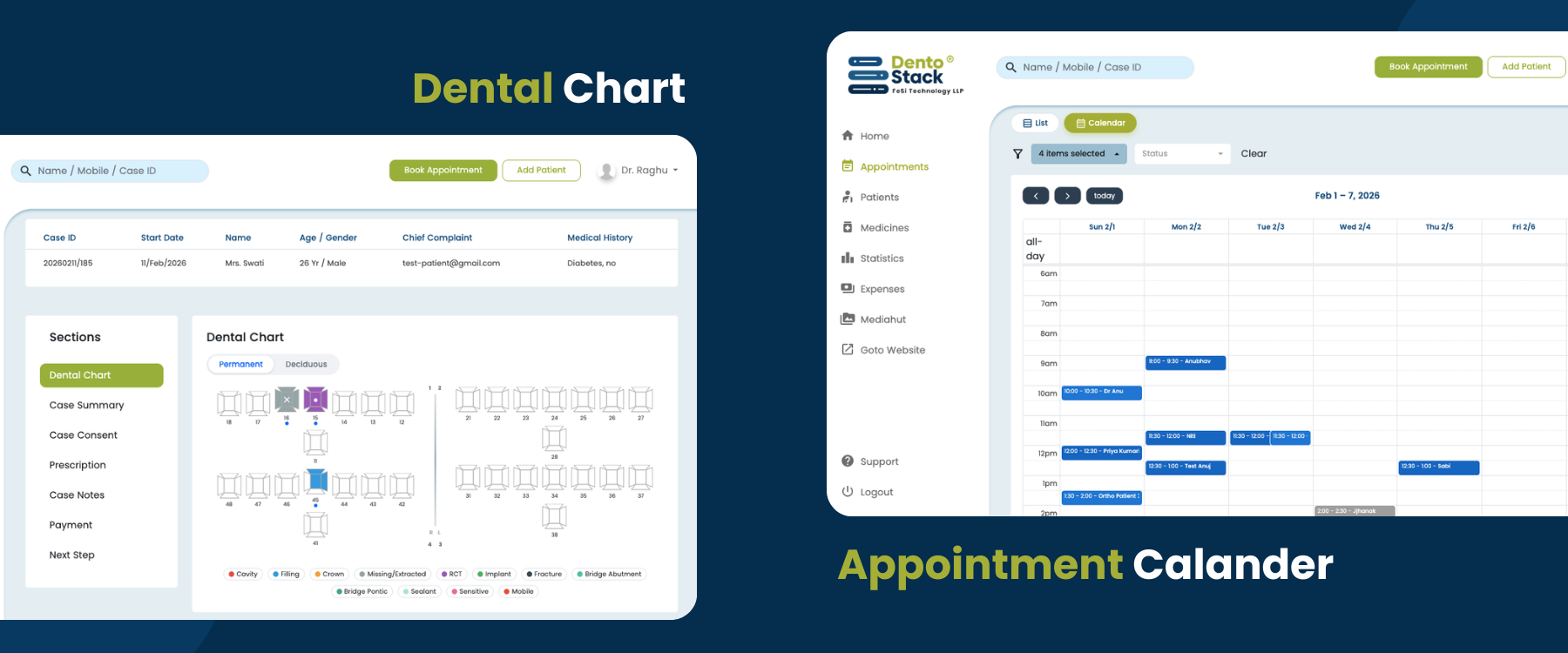
Dentostack has released its March update with two useful features aimed at making daily clinic operations simpler for dentists. The update includes a Dental Teeth Chart and an improved Appointment Calendar, both designed to address common issues in patient examinations and scheduling.
Simplifying Dental Examination with Teeth Chart
One common challenge during dental consultations is documenting the exact condition of each tooth. Many clinics still use handwritten notes or scattered digital records, which can lead to confusion or incomplete documentation.
The new Dental Teeth Chart solves this issue by allowing doctors to visually mark teeth with specific problems and the required treatments. Instead of writing lengthy descriptions, dentists can directly select the tooth and assign the condition to it. This structured format helps keep examinations organized. The findings automatically appear in the examination notes, making it easy to maintain accurate patient records. It saves time during consultations and ensures that no important detail is overlooked.
Clear Appointment Management with Calendar View
Managing appointments presents another challenge in busy clinics. Without a clear view of available time slots, staff may accidentally double-book patients or schedule appointments too closely together.
The new Calendar feature provides doctors and staff a straightforward visual overview of the schedule. They can easily check available slots, book new appointments, and reschedule existing ones without confusion. Since the system clearly shows open and occupied slots, it helps prevent overlapping appointments and improves overall clinic coordination.
Advantages for Dental Clinics
With these two updates, Dentostack aims to make clinic workflows smoother. The benefits include:
- Faster and more organized patient examinations
- Clear documentation of dental conditions and treatments
- Better appointment planning and time management
- Reduced chances of scheduling errors
Overall, the March update helps dental clinics operate more efficiently while ensuring a more structured experience for both doctors and patients.