


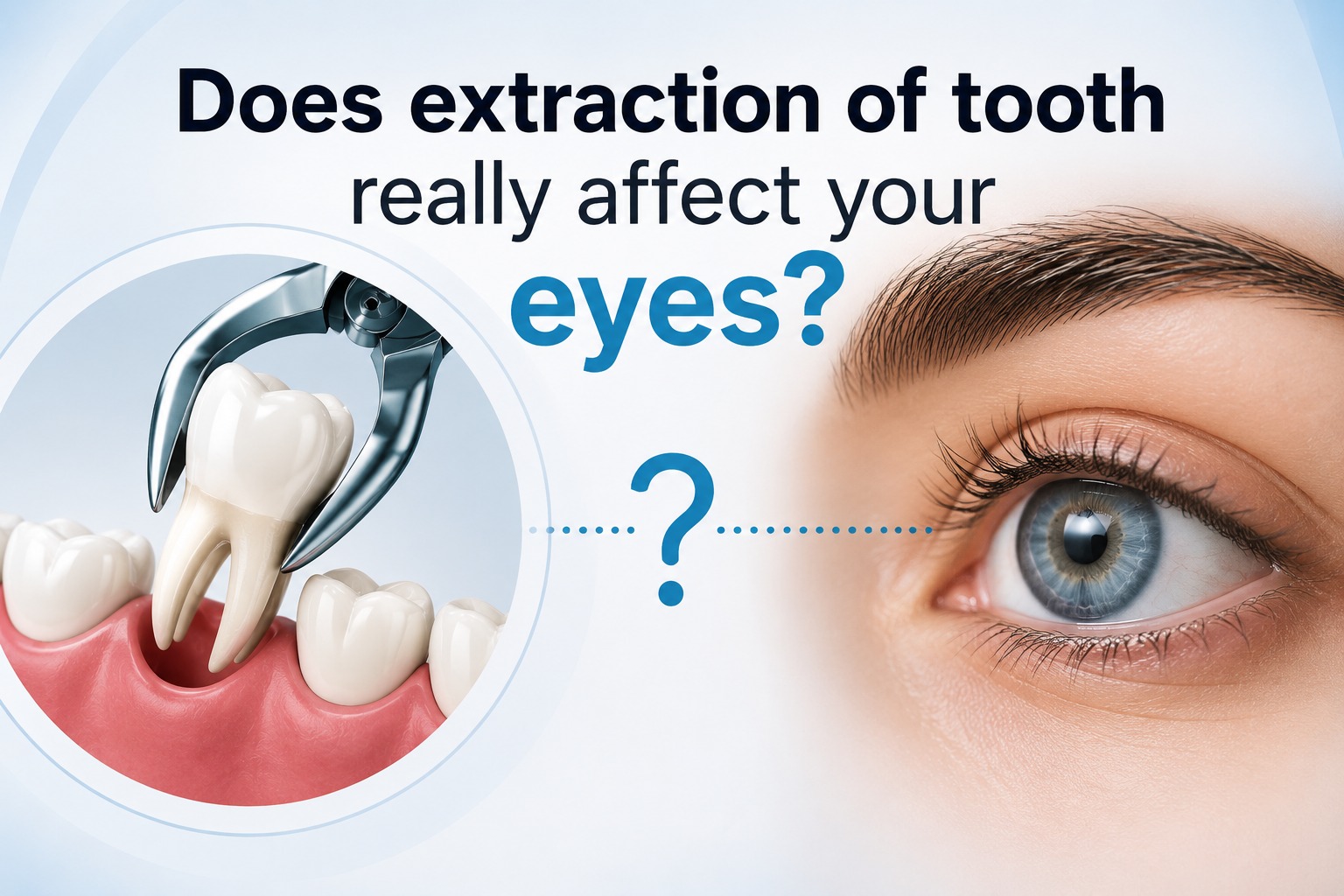
"Doctor, if I have a tooth removed, will my eyes be affected?" This is one of those old wives' tales that is passed down from one generation to the next. I get why it would be a concern - our eyes, nerves and teeth all reside in a relatively compact area in the head.
However, the reality is that a tooth extraction simply does not cause vision loss or damage to the eyes.
The reality is that a patient presents with severely decayed, diseased, or fractured teeth. They're often nervous about having teeth removed, and someone tells them "Don't have the teeth removed - you'll go blind." As a result, the patients delay their treatment and wait until the infection flares up and it needs to be taken out more urgently. Here's what happens.
If you don't have treatment of that tooth taken care of then - in fact - the more damage to your oral health that occurs and, for most patients, tooth extraction is the correct way to go at that time.
Why This Myth Exist
Many Patients Still Wonder Many people ask me whether or not removal of teeth causes vision loss, usually with concerns that their vision will suffer in the future. The fact of the matter is that even though the teeth, and the eye, are located close together and they share branches of the same primary facial nerve, the removal of teeth does not in itself affect your eyes. You will likely feel some discomfort after a tooth extraction; it will often extend from the tooth into your cheek, jaw and even the eye, but that’s just a result of nearby nerve stimulation.
The actual vision that the eye is receiving is not impacted by any procedure related to extraction.
When Does a Patient Need to Have a Tooth Extracted?
Every time we attempt to save a patient's teeth, that is the goal.
Whether it be fillings, root canals, or periodontal therapy to address gum disease, we will try to save teeth.
But sometimes teeth are beyond repair, and removal is the only option available. If teeth can't be saved, you can suffer much more problems by not removing them. Tooth decay (cavities), Gum Disease Advanced Gum Disease and infection that is in the process of progressing to affect the supporting bone; broken tooth where more than 50 percent of the tooth is destroyed, and there is not enough tooth structure to provide adequate support for a crown. Other indications include wisdom teeth, that often have a tendency to become infected or to cause problems to surrounding teeth, or to impact neighboring teeth; overcrowding (to prepare for orthodontics); the majority of badly infected teeth, that can cause pain and suffering to neighboring structures and further bone loss if not properly addressed.
Can a Tooth Extraction Lead to Blindness or Vision Loss?
A standard dental extraction will not affect your eyesight in any way. This statement is based on the fundamental principles of how our bodies work, and more than several years of medical experience. In the case of the extremely rare occasions in which patients present with visual disturbances following complex surgical dental procedures, it is due to a specific, rare complication.
The complications may include those related to medications used, infections that cause neurological effects or severe bleeding in that area, and these very specific cases should not lead patients to assume their vision is at risk from a simple extraction.
What Can You Expect After an Extraction?
Most patients experience mild discomfort for a few days.
It's completely normal to have:
- Mild pain or soreness
- Swelling around the cheek
- Difficulty opening the mouth fully
- Minor bleeding for a few hours
- Tenderness while chewing
These symptoms gradually improve as the area heals. Following your dentist's post-extraction instructions helps ensure a smooth recovery.
Why Delaying an Extraction Can Be Risky
This is the part I always explain to patients.
When a badly infected tooth is left untreated because of fear or myths, the infection doesn't simply disappear. It can spread into the surrounding bone, gums, nearby teeth, or even deeper facial spaces.
Instead of protecting your health, delaying treatment can lead to more pain, swelling, emergency treatment, and more complicated procedures later.
Treating the problem at the right time is always the safer choice.
Final Thoughts
One of my biggest goals as a dentist is helping patients separate facts from myths. Tooth extraction may sound intimidating, but it does not affect your eyesight. When a tooth cannot be saved, removing it is often the healthiest decision to relieve pain, eliminate infection, and protect your overall oral health.
If you're ever unsure about whether a tooth should be removed, don't rely on old beliefs or hearsay. Talk to your dentist, ask questions, and make decisions based on proper dental advice. A healthy mouth starts with the right information—and that's something worth seeing clearly.